
Why Your Feed Never Looks the Same as Anyone Else’s
Introduction
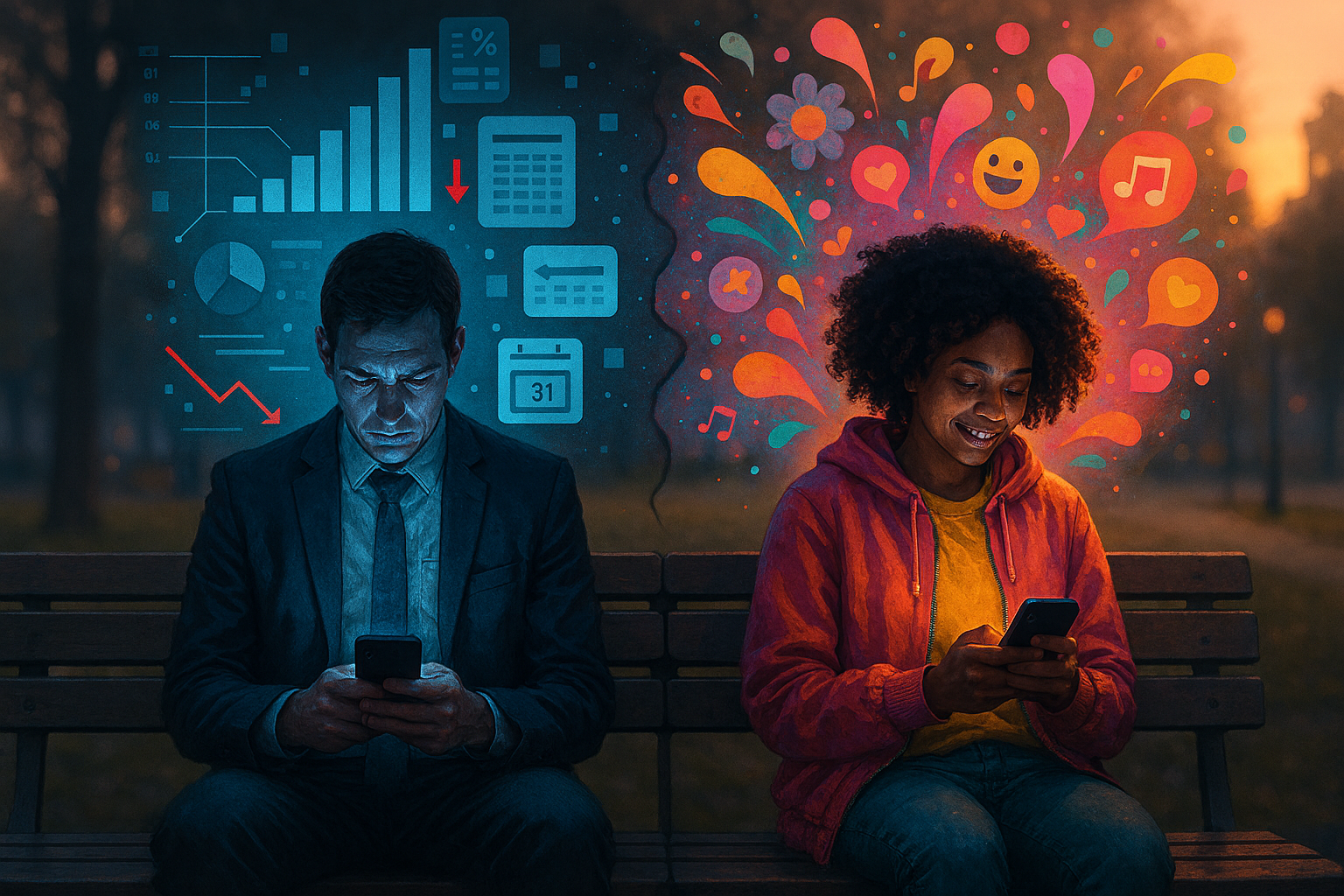
Sit next to someone else and open the same social platform at the same time. Scroll for a minute. What you will see is almost certainly different — not just slightly, but fundamentally.
Different posts, different topics, different moods, different priorities.
This is not coincidence, and it is not random. Modern platforms are designed so that no two people experience the same information environment. Each feed is constructed dynamically, in real time, based on how the system interprets your past behavior, preferences, and predicted interests.
Your feed is not a window into “what’s happening.” It is a personalized projection of what the platform thinks will keep your attention.
Understanding why that is the case helps explain much about how the modern internet actually works.
Personalization Is the Default
Early websites showed the same content to everyone. Today’s platforms do not.
Search engines, social networks, video platforms, and marketplaces all operate on the assumption that relevance is personal. What matters to one person is noise to another. Personalization is how platforms manage scale.
This means that content is no longer selected only by topic or popularity, but by probability: the system estimates what you specifically are most likely to engage with next.
The feed is not a list of what exists. It is a list of what the system predicts you will respond to.
What Signals Shape Your Feed
Platforms cannot know what you want directly. They infer it from behavior.
Common signals include:
- What you click on
- How long you look at something
- What you scroll past quickly
- What you like, save, comment on, or share
- What you search for
- What you ignore
Each of these actions is treated as a form of feedback. Over time, the system builds a model of what holds your attention, what you avoid, and what patterns your behavior follows.
This is why feeds adapt quickly. A short change in behavior — watching a few videos on a new topic, for example — can shift what the system shows you for days or weeks afterward.
Why This Is Useful
From a functional perspective, personalization solves a real problem.
There is far more content than any individual could process. Without filtering, feeds would be overwhelming, noisy, and largely irrelevant. Personalization reduces that overload.
It allows:
- Faster discovery of relevant content
- Less exposure to things you consistently ignore
- More efficient use of limited attention
In that sense, personalization is not inherently manipulative. It is an optimization strategy for an environment with too much information.
Why It Has Side Effects
The same mechanism that increases relevance also increases separation.
When each person’s feed is optimized for them, shared experience declines. Two people can inhabit the same platform but encounter entirely different topics, narratives, and frames.
This has subtle consequences:
- Public conversations fragment
- People develop different assumptions about what is common or important
- Misunderstandings increase when others’ information environments are invisible to us
This is one reason online disagreements often feel confusing. People are not just arguing about opinions — they are often starting from different informational worlds.
The Role of Automated Systems
At scale, this personalization cannot be managed manually. It is handled by automated systems that continuously adjust ranking and recommendation based on data.
These systems are part of what is described in The Hidden Systems Shaping What You See Online.
At scale, they rely heavily on the kind of filtering processes discussed in AI as a Filter: Why You See Some Things and Never Others.
They are not making conscious choices about meaning or truth. They are optimizing mathematical objectives related to engagement, relevance, safety, and retention.
The effects feel intentional. The process is largely mechanical.
Why This Matters
When feeds differ, perceptions differ. When perceptions differ, shared understanding becomes harder.
This does not mean personalization is harmful or that platforms are deliberately misleading users. It means that the basic conditions under which people form opinions, learn about the world, and understand each other have changed.
The question is no longer just “What is happening?”
It is also “What is happening for me?”
And increasingly, the answer depends on systems that operate quietly in the background, shaping not what exists — but what becomes visible.